US Mirror Satellite: A Bright Idea or a Glare Problem?
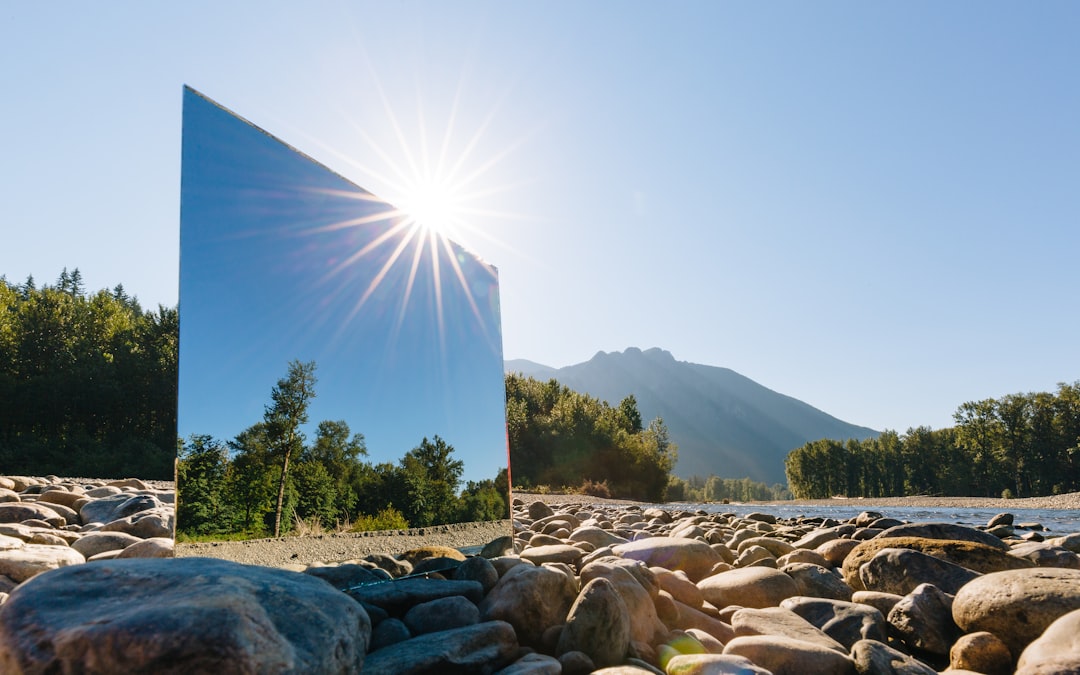
Photo by Dave Hoefler on Unsplash
The US just gave the green light to launch a mirror satellite designed to reflect sunlight and illuminate the Earth at night. Let that sink in.
The Specter of Perpetual Twilight
We’ve been here before. Humanity, gazing at the stars, then deciding we could probably just stick a bigger bulb in the cosmos. The idea of space-based mirrors isn’t new; it’s a sci-fi trope that’s occasionally tried to leap off the page and into low Earth orbit. Now, it seems, one made it past the regulators.
This isn’t about some subtle ambient glow. When you talk about “illuminating the Earth at night” with reflected sunlight, you’re talking about a significant energy input. The physics are straightforward enough: bounce photons off a large reflective surface in space, aim them at a target on Earth. The engineering, however, is a different beast entirely. We’re talking about massive structures, orbiting with precision, maintaining alignment against atmospheric drag and solar winds. It’s an ambition that makes the Hubble Space Telescope look like a toy.
A Brief History of Cosmic Bling
The concept isn’t fresh off the drawing board. Back in the early 1990s, Russia launched the Znamya 2 mission. It was a proof-of-concept, a 20-meter solar sail that unfurled from a Progress supply ship. For a few minutes, it reportedly cast a moving patch of light, equivalent to several full moons, over parts of Europe. It was a fleeting, mostly symbolic demonstration. Znamya 2.5 followed, but failed to deploy properly. These were experiments, test flights, not the large-scale perpetual illumination now being discussed. I’ve seen countless pitches for grand space endeavors, from asteroid mining to orbital hotels, but the space mirror always felt like one of the more audacious, and potentially problematic, concepts.
The underlying drive for these projects is often framed with utopian ideals: solving energy crises, aiding disaster zones, or even extending daylight for agriculture in northern latitudes. But the practicalities, the ecological fallout, and the sheer hubris often get swept under the rug of innovation. This US approval, while lacking specific details about the project itself, signals a shift from theoretical discussion to actual implementation, a move that demands rigorous scrutiny, not just starry-eyed optimism.
The Promises and the Perils
Proponents of space mirrors often paint a rosy picture. Imagine cities needing less electricity for streetlights, reducing energy consumption and carbon footprints. Consider the potential for extended growing seasons in areas with limited daylight, boosting food production. Or providing emergency illumination to disaster-stricken regions where power grids are down. These are compelling narratives, designed to sell the public on the idea of a brighter future.
But every reflection has a dark side. The potential for unintended consequences here is immense, bordering on catastrophic. We are talking about fundamentally altering a planet’s natural light cycle.
| Proposed Benefit | Potential Risk/Challenge |
|---|---|
| Reduced ground lighting | Increased light pollution, energy usage for mirror upkeep |
| Extended growing seasons | Disruption of plant photoperiods, unknown ecological stress |
| Disaster relief illumination | Precise targeting challenges, potential for misuse |
| Enhanced public safety | Disruption of human circadian rhythms, sleep disorders |
| Novel energy savings | High deployment/maintenance cost, orbital debris risk |
| Scientific advancement | Interference with ground-based astronomy |
When the Sky Becomes a Billboard
Let’s talk about light pollution, because this is where the mirror satellite concept goes from ambitious to terrifying. For decades, astronomers, environmentalists, and anyone who appreciates the night sky have been fighting an uphill battle against the encroaching glow of our cities. Skyglow washes out stars, disrupts wildlife, and even impacts human health. We’re now considering launching a giant celestial flashlight to make it worse, on a global scale.
Nocturnal animals rely on specific light-dark cycles for everything: hunting, migrating, breeding, navigation. Bats, owls, insects, amphibians – their entire existence is tuned to the rhythm of the sun and moon. Flood the night with artificial sunlight, even if it’s “dimmed,” and you are pulling the rug out from under entire ecosystems. Insect populations, already collapsing globally due to habitat loss and pesticides, are particularly vulnerable. Many navigate by moonlight; an artificial sun could send them spiraling into confusion, or worse, into an early grave. This isn’t just about disrupting a few bugs; it’s about potentially unraveling complex food webs.
The Human Element: Sleep, Health, and Stargazing
Humans aren’t immune to light pollution either. Our circadian rhythms, the internal clocks that regulate sleep, hormone production, and mood, are heavily influenced by natural light cycles. Constant, or even prolonged, artificial light at night has been linked to sleep disorders, depression, obesity, and even increased risks of certain cancers. Are we ready to roll the dice on public health for the sake of, what, slightly cheaper streetlights?
And what about the sheer aesthetic and scientific loss? Ground-based astronomy, already struggling against urban sprawl, would be crippled. Imagine trying to observe distant galaxies or track near-Earth asteroids with a giant spotlight in the sky. Indigenous cultures, for whom the night sky holds profound spiritual and navigational significance, would see their heritage literally overwritten by corporate ambition. This isn’t just a technical challenge; it’s a cultural, ecological, and deeply ethical one.
Orbital Debris and the Kessler Syndrome
A massive mirror satellite isn’t just a light source; it’s a giant piece of hardware in orbit. Space is already a junkyard. Thousands of defunct satellites, rocket stages, and tiny shards of metal hurtle around Earth at terrifying speeds. A collision with even a small piece of debris can shatter a satellite into thousands more pieces, creating a cascade effect known as the Kessler Syndrome. This could render certain orbital altitudes unusable for generations.
The larger the satellite, the greater the cross-section for potential collisions. Deploying a structure designed to reflect sunlight implies a significant surface area. The risk isn’t just to this satellite, but to every other satellite in its orbital path, from communication relays to weather monitors to vital scientific instruments. Have we truly modeled the long-term impact on orbital stability? Or are we just hoping for the best, as we often do?
Geopolitics, Control, and the Unseen Hand
Who controls the switch? This is not a trivial question. A mirror satellite capable of illuminating large swathes of the Earth also possesses the capability to not illuminate them, or to concentrate light. The potential for geopolitical leverage is staggering. Imagine a scenario where a nation, or a private consortium, controls a satellite that can provide critical illumination to an ally during a crisis, or deny it to an adversary.
This isn’t some Bond villain plot point; it’s a real-world concern. The dual-use nature of space technology is well-established. GPS, initially a military project, became a global civilian utility. But a giant space mirror has far more direct and immediate implications for control over resources and even populations. The Outer Space Treaty of 1967 provides a framework for the peaceful use of space, stating that space is “the province of all mankind.” But a US-approved satellite implies national control over an asset that affects everyone. How do you regulate light that spills across borders? What if one country’s “night light” is another’s ecological disaster?
The Economics of Illumination
Then there’s the money. Who funds these colossal projects? What’s the return on investment? The justification usually involves energy savings on Earth, but the cost of developing, launching, maintaining, and eventually deorbiting such a massive satellite would be astronomical. Are the projected savings real, or are they a convenient fiction to justify another grand space project?
I’ve seen enough “disruptive innovations” fall flat because the economics didn’t pencil out. From hyperloops that never leave the ground to blockchain solutions for everything, the hype often outpaces the reality. A space mirror isn’t a small-scale pilot project; it’s an infrastructural undertaking on par with a global power grid. The financial and logistical hurdles alone are monumental, even before considering the technical and ethical ones. The private companies pushing these ideas often have a vested interest in securing government contracts, regardless of the broader societal cost.
The Alternative: Ground-Up Solutions
While we’re contemplating mega-structures in orbit, what about the solutions already available on the ground? Investing in smart LED lighting systems, coupled with effective light pollution policies, can drastically reduce energy consumption and skyglow. Decentralized solar power grids and battery storage can provide reliable, sustainable energy to remote areas without the need for orbital intervention. Controlled environment agriculture, using greenhouses and vertical farms, can extend growing seasons and boost yields without messing with the planetary light cycle.
These aren’t sexy, headline-grabbing projects. They don’t involve rockets and vast reflective sheets. But they are proven, implementable, and address the core problems without introducing a host of new, potentially devastating ones. Sometimes, the most innovative solution isn’t the one that’s furthest away, but the one right under our noses. This US approval feels like a leap of faith into the unknown when proven, safer paths are available.
The Precedent We’re Setting
This US approval is more than just a single satellite launch; it’s a precedent. It signals a willingness to accept large-scale environmental and social manipulation from orbit. Once one such project is approved, what’s to stop others? What about space-based advertising, projecting logos onto the night sky? What about directed energy experiments? The line between “beneficial illumination” and “celestial intrusion” is incredibly thin, and this approval seems to have blurred it further.
Having covered the tech industry’s relentless push for “innovation at all costs,” I’m always wary when the potential downsides are glossed over with vague promises of betterment. The rhetoric around space mirrors often ignores the complexities of our interconnected planet, treating Earth as a giant canvas for technological experimentation rather than a living, breathing ecosystem we are only just beginning to understand. We need to ask harder questions, demand more comprehensive impact assessments, and hold these companies and governments accountable. Because once that mirror is up there, it’s not coming down easily.