Amazon workers face termination after AI testimony
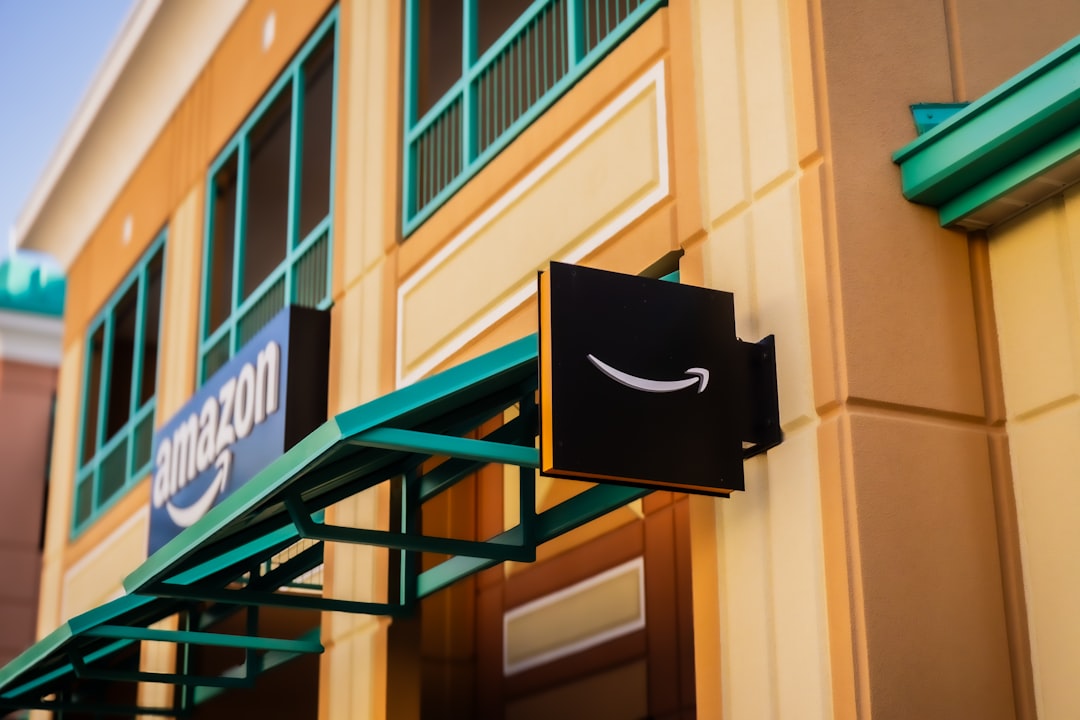
Photo by Osmany M Leyva Aldana on Unsplash
Amazon’s latest labor dispute isn’t about bathroom breaks or impossible quotas; it’s about AI, data centers, and the oldest corporate playbook in the book: intimidation.
Amazon’s AI Ambitions Meet Old-School Union Busting
Let’s not pretend we’re surprised when a company as massive as Amazon—one that pioneered the modern surveillance state for its warehouse workers—turns its all-seeing eye on employees who dare speak out. This time, it’s not just about better pay or safer conditions; it’s about the future of computing infrastructure: AI data centers. Specifically, the concerns raised by workers about the environmental impact and energy demands of these server farms.
These aren’t rogue activists; these are employees, some of them engineers and technical staff, who voiced concerns about Amazon Web Services (AWS) data centers in Northern Virginia. They testified before the Fairfax County Board of Supervisors, urging them to slow down the data center expansion due to environmental impacts. Fairfax County is practically the global epicenter of cloud computing, a fact Amazon has leveraged to build an empire. The county board, for its part, has been under increasing pressure from residents about noise, power demands, and land use.
The accusations are chillingly familiar: post-testimony, these employees claim they were subjected to intense scrutiny, monitoring, and threats of termination. Amazon’s official line, predictably, is that these employees violated company policy by speaking publicly “as representatives” of the company without authorization. It’s a convenient dodge, a corporate boilerplate designed to silence dissent. But it’s also a tactic as old as industry itself.
I’ve seen this play out at every major tech company for twenty years. From Microsoft’s early anti-union maneuvers to Google’s internal dissent crackdowns, the script is always the same. “You signed an NDA.” “You violated policy.” “You didn’t go through proper channels.” All designed to make speaking truth to power a career-ending move. It’s not about policy; it’s about control.
The AWS Data Center Empire and its Environmental Cost
AWS isn’t just a cloud provider; it’s the backbone of the internet, powering everything from Netflix to the CIA. Its growth has been astronomical, and a huge part of that growth is tied to the explosion of AI. Training large language models (LLMs) like OpenAI’s GPT or Google’s Gemini requires immense computational power, which translates directly to massive data centers.
These data centers are energy hogs. They suck up megawatts of electricity, often from grids still heavily reliant on fossil fuels. They also require enormous amounts of water for cooling. Northern Virginia, for example, is grappling with a severe energy crunch directly attributable to the proliferation of these facilities. Local communities are complaining about the noise from cooling towers and the sheer scale of the industrial infrastructure popping up in what were once rural areas.
| Concern | Employee Claim | Amazon’s Stance (Implied/Official) | Industry Reality |
|---|---|---|---|
| Environmental Impact | Data centers consume excessive energy & water, contribute to climate change. | Focus on “sustainability initiatives” and “net-zero goals.” | Significant energy footprint, growing demand, potential for greenwashing. |
| Worker Intimidation | Monitored, threatened with termination after public testimony. | Policy violation for speaking as company representative without authorization. | Common corporate tactic to suppress dissent and control narrative. |
| Public Transparency | Company should be more open about environmental costs. | Information is proprietary or part of long-term planning. | Companies generally resist disclosing granular operational data that could be seen negatively. |
| AI’s Footprint | Rapid AI expansion exacerbates environmental strain. | AI development is essential for innovation and future growth. | AI training is incredibly resource-intensive; sustainability is a growing concern. |
The Reddit community, specifically r/technology, is having a field day with this. You see comments like, “Of course they did, it’s Amazon,” or “This is why we need stronger labor laws.” Others are pointing out the hypocrisy of Amazon touting its sustainability goals while allegedly silencing employees who raise legitimate environmental concerns. The sentiment is largely one of exasperation, a collective sigh at the predictability of corporate behavior.
[!– ADSENSE_MIDDLE_PLACEER –]
Corporate Free Speech vs. Employee Free Speech: A Mismatched Fight
Amazon, like any corporation, zealously guards its right to free speech through lobbying, advertising, and PR. But when its employees attempt to exercise their own, suddenly there are “policies” to enforce. This isn’t unique to Amazon. Look at Google firing employees for organizing against Project Maven, or Apple’s similar crackdowns. The pattern is clear: companies want to control the narrative, especially when that narrative involves potential reputational damage or regulatory scrutiny.
The issue here isn’t merely about environmental activism; it’s about the erosion of employee voice in an increasingly powerful corporate landscape. When companies can simply declare any public statement by an employee to be “speaking as a representative” and grounds for termination, it chills all forms of internal dissent. It forces employees into a difficult choice: speak up and risk your livelihood, or stay silent and become complicit.
Having covered countless E3 announcements where executives promised the moon and delivered a dirt clod, I’ve learned to read between the lines of corporate statements. When Amazon says these employees violated policy, what they mean is, “These employees made us look bad, and we can’t have that.” It’s not about the letter of the law; it’s about the spirit of control. And in the tech industry, where the line between innovation and exploitation is often razor-thin, control is everything.
The Broader Implications for Tech Labor and AI Ethics
This isn’t just an Amazon problem; it’s a symptom of a larger struggle within the tech industry. As AI rapidly advances, concerns about its ethics, its environmental impact, and its societal consequences are becoming more pronounced. Who gets to define these narratives? Is it just the corporations building the tech, or do the people building it and the communities affected by it also have a say?
The “AI ethics” conversation often feels like an academic exercise, divorced from the messy realities of corporate power. But incidents like this bring it crashing back to earth. How can we have an honest discussion about the responsible development of AI if the very people working on it, or adjacent to it, are afraid to voice concerns? It creates a culture of fear, where potential problems are swept under the rug rather than openly addressed.
Consider the energy demands of future AI models. Estimates for training the next generation of LLMs are staggering. Microsoft, a major AWS competitor, recently announced massive investments in AI infrastructure, including new data centers. This isn’t a niche concern; it’s a fundamental question about the sustainability of our technological future. And if employees can’t even raise these questions without fear of reprisal, then we’re all in trouble.
This kind of corporate behavior also weakens trust, both internally and externally. Employees who feel silenced are less likely to innovate, less likely to flag issues, and ultimately, less loyal. And the public, increasingly savvy to corporate doublespeak, sees through the thin veil of “policy violations” to the underlying power dynamics.
The Regulatory Gap: Why Companies Get Away With It
The reason companies like Amazon can pull these stunts is a regulatory environment that often favors corporate power over individual employee rights. In the U.S., “at-will employment” laws give employers significant leeway to terminate workers, making it difficult for employees to challenge such actions unless they can prove discrimination or a violation of specific labor protections. Whistleblower protections exist, but they are often narrowly defined and difficult to invoke successfully.
Europe, with its stronger labor unions and more robust employee protection laws, might offer a different scenario. But in the highly competitive and largely unregulated American tech landscape, companies often operate with a degree of impunity. There’s a persistent reluctance among lawmakers to introduce legislation that might be perceived as stifling innovation, even when that “innovation” comes at the cost of basic worker rights or environmental integrity.
The National Labor Relations Act (NLRA) does protect employees’ rights to engage in “concerted activities” for their mutual aid or protection, which can include speaking out about workplace conditions. But enforcing these rights is a lengthy, expensive process, often beyond the means of individual workers. Companies with endless legal budgets can simply wear down plaintiffs. This imbalance of power is precisely what Amazon is leveraging here. It’s a calculated risk, betting that the cost of potential legal challenges or PR backlash is less than the cost of allowing dissent to fester.
The lack of robust enforcement mechanisms means that while these actions might generate negative headlines, they rarely result in significant penalties for the company. This creates a perverse incentive structure where intimidation is a low-risk, high-reward strategy for maintaining control.
The Illusion of Corporate Social Responsibility
Amazon, like many tech giants, loves to talk about its environmental commitments and social responsibility initiatives. They issue glossy reports, make pledges, and run ad campaigns highlighting their efforts. But when employees raise genuine concerns that challenge the core business model – like the environmental footprint of AWS data centers – that commitment often crumbles. It exposes the performative nature of much corporate social responsibility (CSR).
Real CSR would involve fostering an environment where employees feel empowered to raise concerns, even if those concerns are uncomfortable for management. It would mean transparently addressing the environmental impacts of their operations, not just through PR, but through genuine dialogue and corrective action. Instead, we see a company that appears to prioritize silencing critics over addressing the substance of their critique.
This isn’t just about Amazon’s reputation; it’s about the credibility of the entire tech industry’s “green” initiatives. If the leading players can’t even tolerate internal dissent on environmental matters, what does that say about their actual commitment to sustainability? It suggests that profit and unchecked growth will always trump genuine ethical considerations, no matter how many solar panels they put on their data centers.
This incident is a stark reminder that we shouldn’t take corporate sustainability claims at face value. We need independent scrutiny, robust regulation, and, critically, the protected voices of the workers who are on the front lines and often see the truth long before it makes it into an annual report. The fight for ethical tech isn’t just about algorithms; it’s about power, transparency, and the fundamental right to speak up.
The Future of Tech Dissent Looks Bleak
Amazon’s alleged actions send a clear message: speak out against us, especially on issues that could impact our bottom line, and your job is on the line. This isn’t just about one company; it sets a precedent for the entire industry. If tech giants can so easily silence employees on critical issues like environmental impact and AI ethics, what hope do we have for meaningful dialogue or accountability? The future of tech dissent looks bleak, paved with NDAs and the constant threat of termination.