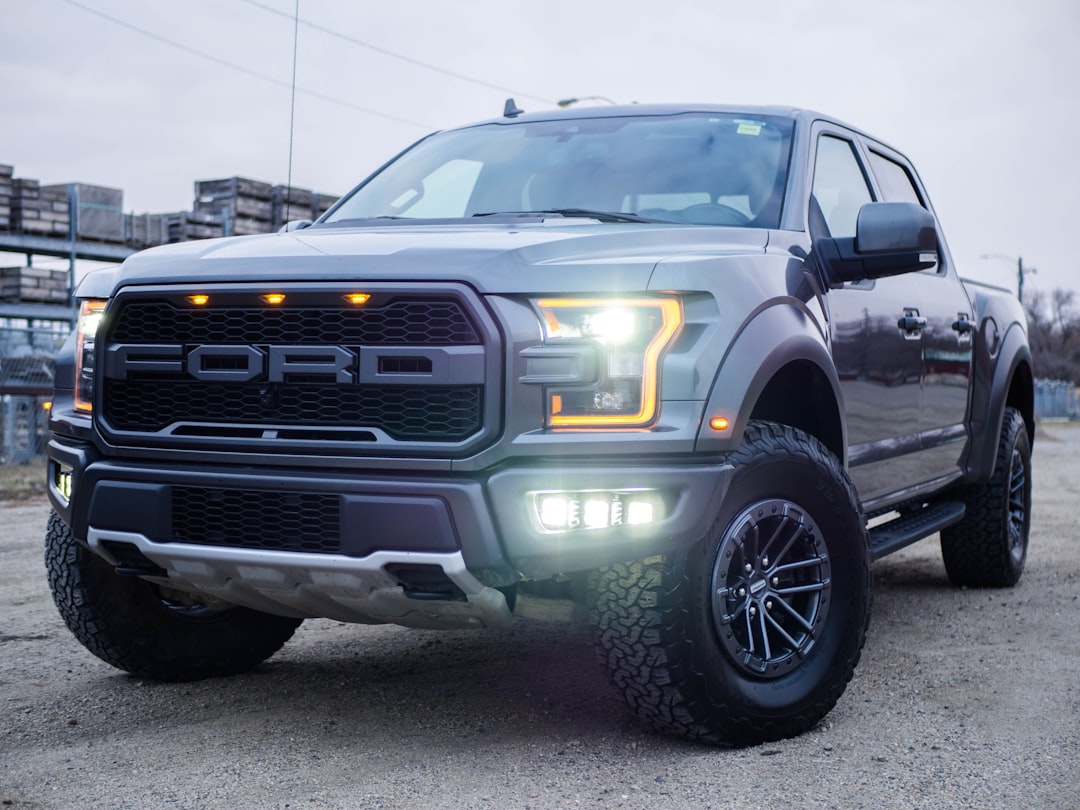
Ford rehires ‘gray beard’ engineers after AI falls short
Ford’s latest AI misadventure proves the future of manufacturing still needs grease-stained hands.
Ford’s AI Dream Hits a Wall (Again)
Remember all those glossy presentations? The ones where Ford was going to revolutionize production with AI, shedding the dead weight of human experience? Turns out the robots aren’t quite ready to assemble a F-150 by themselves. Surprise.
The story broke quietly: Ford, after publicly touting its AI-driven efficiency gains, started calling up retired engineers. Not for a polite chat about their pensions, but to lure them back onto the factory floor. They needed the “gray beards,” the ones who could actually fix things when the algorithms choked.
This isn’t some isolated incident. It’s a pattern we’ve seen across the industry for years, an endless cycle of over-promising and under-delivering when it comes to AI in complex physical systems. Every CES has a dozen startups promising to automate away entire industries, only for reality to bite back hard.
The Problem with Pure Data
AI, at its current stage, excels at pattern recognition within defined datasets. Give it a million images of cats, and it’ll spot a cat. Give it a mountain of sales data, and it’ll predict trends. What it struggles with is the unexpected, the nuanced, the “feel” of a machine that’s about to break.
That’s where the old guard comes in. They’ve heard the subtle change in a machine’s hum before it seizes. They’ve seen a dozen variations of a specific defect and know the root cause isn’t always what the diagnostic software spits out. Their knowledge isn’t just data; it’s intuition honed over decades.
Ford’s initial push was to automate quality control and predictive maintenance. Sounds great on paper. Imagine an AI watching every weld, every bolt, every paint job, flagging imperfections before a human even sees them. Or predicting a machine failure days in advance.
The reality, as always, is messier. AI models, particularly in manufacturing, need perfect data. They need perfectly labeled images of every possible defect, under every possible lighting condition, at every angle. They need sensors calibrated to insane precision, and they need an environment free of dust, vibration, and the general chaos of a factory floor.
The Lure of ‘Efficiency’
Companies like Ford are under immense pressure to cut costs and boost efficiency. The promise of AI, with its potential to eliminate human error and reduce labor overhead, is incredibly seductive. Consultants swarm, selling bespoke AI solutions that often amount to glorified Excel macros.
Executives, eager to show Wall Street they’re “innovating,” greenlight these projects. They see headlines about AI-powered robots, hear buzzwords like “Industry 4.0,” and imagine a world where their factories run themselves. The practical challenges, the data quality nightmares, the sheer complexity of real-world manufacturing, often get glossed over.
I’ve seen this exact movie play out with “smart factories” for over a decade. The initial rollout is met with fanfare. Then come the quiet reports of glitches, the unexpected downtimes, the need for human intervention. Eventually, the ambitious goals are scaled back, and the shiny new AI system ends up being a sophisticated monitoring tool rather than a fully autonomous operator.
Reddit, naturally, had a field day with this news. Comments ranged from “told you so” to “AI is just glorified statistics.” Many pointed out that this isn’t a failure of AI itself, but a failure of leadership to understand AI’s current limitations. “You can’t automate common sense,” one user likely quipped. Another probably joked about Ford’s AI designing a new Mustang with square wheels.
The Real Cost of “Digital Transformation”
This isn’t just about Ford. It’s a microcosm of a larger trend where companies, in their haste to embrace “digital transformation,” shed valuable institutional knowledge. They push out experienced workers, confident that algorithms and younger, cheaper talent can pick up the slack.
When you let go of engineers who’ve spent 30 years troubleshooting the same assembly line, you’re not just losing a salary line item. You’re jettisoning a database of highly specific, often undocumented knowledge. That tribal knowledge, accumulated over decades, is incredibly difficult, if not impossible, to digitize.
| Skill/Knowledge Type | Human Engineer (Gray Beard) | AI System (Current Gen) |
|---|---|---|
| Problem Solving | Intuitive, contextual, root-cause focused, handles novel issues | Pattern-based, data-driven, struggles with ambiguity/novelty, requires pre-trained scenarios |
| Adaptability | High, learns from experience, adjusts to changing conditions | Low, requires retraining for new conditions/data, brittle outside training domain |
| Data Requirements | Observational, experiential, qualitative | Vast, clean, labeled, quantitative data for training |
| Cost | Salary, benefits, pension | Development, infrastructure, data acquisition, maintenance, retraining |
| Speed of Diagnosis | Varies, but can be instant for familiar issues | Fast for trained patterns, slow/impossible for untrained |
| Transferability | Mentorship, documentation, on-the-job training | Model deployment, API integration |
The problem intensifies in manufacturing because the environment is rarely pristine. Sensors drift. Parts come slightly out of spec. Machines vibrate in new ways. These are the kinds of “edge cases” that AI models, trained on clean data, simply aren’t equipped to handle. A human, however, can quickly adapt and compensate.
The AI Hype Cycle: A Brief History
This isn’t the first time we’ve seen the AI hype cycle crash and burn. The 1980s had expert systems, promising to encode all human knowledge into logic rules. They failed because real-world knowledge is too vast and too fluid. The 1990s and early 2000s saw neural networks rise and fall, limited by compute power and data availability.
Now, with powerful GPUs and mountains of data, we’re in another AI spring. But the fundamental limitations persist. AI is a tool, not a sentient replacement for human ingenuity. It augments, it assists, it automates specific, well-defined tasks. It doesn’t spontaneously develop common sense or intuition.
Ford isn’t alone in learning this lesson the hard way. Remember when IBM’s Watson was going to revolutionize healthcare? Turns out diagnosing cancer is a bit more complex than winning Jeopardy, and doctors weren’t too keen on algorithms dictating patient care without human oversight. The project quietly pivoted, as most of these grand AI schemes do. You can read more about Watson’s journey from medical marvel to niche tool at Ars Technica.
The Unseen Value of Experience
What does a “gray beard” engineer bring to the table that an AI can’t? Decades of failure. They’ve seen every variant of engine misfire, every tooling malfunction, every quality control nightmare. They’ve learned from mistakes that aren’t logged in any database.
They also understand the system holistically. An AI might optimize one part of the assembly line, but an experienced engineer understands how a change in one area ripples through the entire process. They can foresee downstream consequences that an isolated algorithm simply won’t predict. This holistic understanding is crucial for complex operations like automotive manufacturing.
Companies often view these experienced employees as expensive. Their salaries are higher, their benefits more substantial. The temptation to replace them with a younger, cheaper workforce or, even better, an algorithm, is strong. But the hidden cost of losing that institutional knowledge only becomes apparent when things go wrong. And in manufacturing, things always go wrong.
The Path Forward: Augmentation, Not Replacement
The smart approach, the one that companies should be taking, is to use AI to augment human capabilities, not replace them wholesale. Let AI handle the repetitive, data-intensive tasks. Let it flag anomalies for human review. Let it predict potential issues, but let the experienced engineer make the final call and implement the solution.
Imagine an AI system that constantly monitors factory floor data, identifies subtle shifts in machine performance, and then alerts a human engineer. The engineer, armed with that insight and their own experience, can then diagnose and fix the problem much faster than before. That’s a powerful combination. It’s not AI or humans; it’s AI and humans.
This is where the current push for AI in manufacturing needs to mature. Instead of chasing fully autonomous factories, companies should focus on building intelligent assistants that empower their existing workforce. This requires a shift in mindset, from seeing AI as a cost-cutting tool to viewing it as an investment in human productivity.
I’ve covered countless product launches where the AI capabilities were glorified marketing fluff. The real innovation often happens quietly, incrementally, when a dedicated team figures out how to make a complex system just a little bit smarter without over-relying on silicon magic. The companies that succeed are those that understand technology serves people, not the other way around. You can see examples of this more measured approach in companies like Siemens, which focuses on digital twins and AI-assisted predictive maintenance rather than full automation, as detailed in their industrial insights.